

Book Review
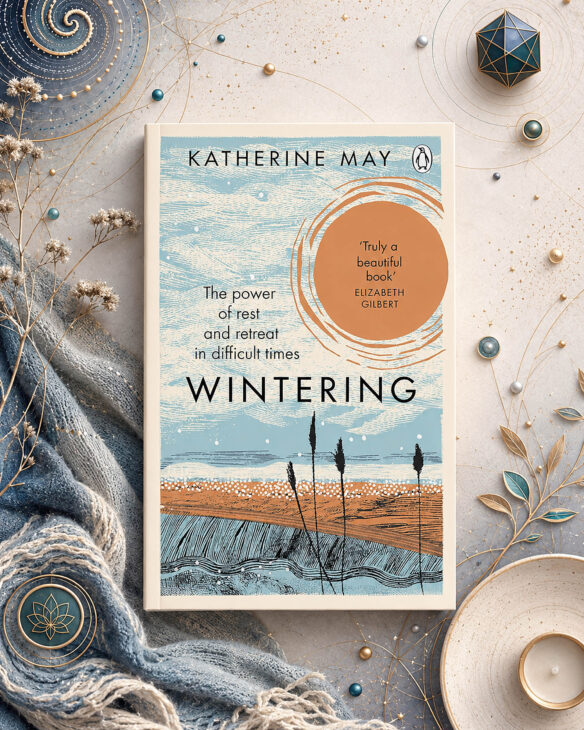
I’ve been reading Wintering slowly, month by month – the December chapter at the start of December, January at the start of January. I’m enjoying it, it’s a calm read. True, I sometimes feel the author is a bit too much like me, which I don’t necessarily love, mostly because we seem to share the same patterns of thinking and acting when stress and fear kick in.
However, a few days ago, I stumbled upon a post on Instagram where the author felt deeply disappointed. Her post wasn’t even a review; it was more of a warning that this book isn’t what everyone expects and that she got absolutely nothing out of it because it’s just “the musings of a privileged white woman.”
“The musings of a privileged white woman,” as one reader put it in a review. And on one hand, she’s right, but on the other…
I have to tell you, my blood pressure spiked a little – but not at the person who wrote the warning. She’s entitled to her opinion, and she didn’t attack the writer personally; she just shared her thoughts and pointed out the “culprit” behind her disappointment.
And that’s exactly where we should start. I don’t know how many times this year I’ve told you that you should trust a publisher’s blurb about as much as an amateur fisherman describing the size of his catch. A blurb is always designed to “lure” you in. It’ll claim a book is perfect for fans of “Gilmore Girls” (when the only similarity is a flannel shirt), or that it’s a mystery in the style of Agatha Christie (when even with the best will in the world, you can’t find a single common thread). And so on. Unfortunately, the publisher’s description isn’t just a marketing tool; in many cases, it completely misses the mark – or rather, stretches reality to its breaking point. It’s crafted in such a way that just two or three sentences sell the title. Period.
If “Wintering” had said on the cover: “A quiet, reflective, autobiographical tale of a middle-aged woman trying to get her life together during a season as inhospitable as winter, following some dramatic events. She describes her days, recalls her travels, and shares her struggles…” Would you buy it? Maybe. Or maybe not at all, because there’s nothing “gripping” about that description. And here’s a little fun fact: the author herself describes Wintering as a form of memoir. Not a single word about it being a self-help book.
Now, let me quote the back cover of the Polish edition: “…a soothing and meditative tale about enduring life’s winters. An invitation to look more gently at the difficult periods in our lives and appreciate how they enrich us. Like a best friend, this book teaches us how to respond to hardships with calm and wisdom, affirming authenticity and true self-care.” End quote. I’m not sure if this is the Polish publisher’s own creative work or a direct translation of the original, as I haven’t held the English edition in my hands, so I’m not throwing stones at anyone.
What jumped out at me first? The word “teaches.” Suggesting it’s a guide on how to look after yourself during a time as tough as winter – when everything is grey, cold, and gloomy, both literally and metaphorically. “Affirmations,” “true self-care” – terms designed to “sell the title” perfectly.
Except this book is NOT a self-help book! It’s not a record of how to practice self-care. It doesn’t “affirm” anything. This book is more of a diary of a very real life, where there’s little affirmation but plenty of insomnia and worrying. Yes, there’s a lot about the need for self-care, but even more about how the body will let you know when it’s had enough by getting sick in the most unexpected ways. It’s about the emotions triggered by travelling to another country and observing their Christmas traditions. About trying to look inward and understand oneself – though whether those attempts are successful? Well, that varies. The author is writing about herself. She isn’t a psychologist writing a manual. In fact, I often felt like she was the one who needed a self-help book!
So, can we really blame that Instagrammer? She was misled by the cover description, plus the posts from “influencers” who often haven’t even opened the book (nothing to look at, no pictures), but write exactly what the publisher suggests, repeating inaccuracies and, sometimes, absolute rubbish.
That’s why I sometimes laugh at my husband. When he starts talking to me about buying a book, he begins with the summary of reviews on Goodreads. But he’s just trying to protect himself from disappointment. He doesn’t just read the publisher’s blurb; he taps into the “collective wisdom” to build a picture of a novel or a series based on what others have written – people who aren’t there to create “marketing content” or “three sentences to sell a book.” They might like it, they might not, but if something described as a self-help book isn’t one, they’ll say so.
And just for the record, let me address this “privileged white woman” label. I don’t like the term. Especially when applied to an ordinary woman – white, yes, but we don’t choose our race – who lives in the UK, has a husband and a son, but whom I’ve never heard or read about having a wealthy aristocratic family, a trust fund, or three properties complete with staff. That’s a bit much. So what if she can go to Iceland or afford therapy? Yes, I know not everyone can, but let’s not blow this “privilege” out of proportion. Besides, she doesn’t look like a “victim” of plastic surgery, she’s not flashing gold bracelets, designer clothes, or luxury handbags in her photos. She seems lovely and very down-to-earth (which I mean as a compliment, as I wouldn’t hesitate for a second to walk up and chat with her, rather than having to book an appointment through an assistant).
But in my opinion, there’s one more reason for the disappointment surrounding books like Wintering. More on that in Part Two:
Aga J. Mackiewicz
for Intensive Chapters
A human, not artificial intelligence, is always responsible for the substantive content and final form of all texts on this website. No text is the result of any advertising partnership. All content represents our own, sometimes subjective, opinions, and no payment has ever influenced them. Photos used in the posts are our own, while graphics are created with the help of AI tools.