


Book Review
In my mind, Marie Benedict seems to be on a specific mission. She writes historical fiction that shines a spotlight on brilliant women unfairly pushed into the shadows of history – often by their fathers, husbands, or partners, and sometimes just by society and tradition. Benedict lets them step out of those shadows, dusts them off, and, backed by solid research, paints a vivid picture full of historical detail and raw emotion. It’s all about their contributions to science, art, and politics. Some might say: “feminist!”. Maybe. But I’d say she’s simply someone who’s fed up with women being marginalised and their achievements swept under the carpet at every turn.
Look, I know Egypt has been everywhere lately, but at least this time it’s not about Cleopatra. Instead, we’re looking at another female ruler – Hatshepsut. On top of that, we get a cheeky peek behind the scenes of early 20th-century archaeological digs.
So, who is the author portraying this time? Two figures: Lady Evelyn Herbert and the Queen of Egypt, Hatshepsut.
And I’ll let you in on a secret right now – there is a lively debate among readers about whose “team” you’re on – Team Evelyn or Team Hatshepsut. I’ll explain exactly what that’s about a bit later.
When we step into the world of the novel, we meet Lady Evelyn Herbert, daughter of Lord Carnarvon. The name might not ring a bell, but this aristocrat had a grand passion that many called a “costly addiction”, he collected ancient artefacts, mostly Egyptian ones. He funded and personally went on excavations in Egypt. And this is where a slightly more familiar name comes in – Howard Carter, the Lord’s close associate and his daughter’s mentor. To young Evelyn, Carter was a true master and teacher. He sparked a love for Egypt, Egyptology, and digs that was massive – and quite extraordinary “for a woman of her class and time”. Quotes intended here, because that brings us to the crux of the matter – Evelyn could have all the passion she wanted and dream of a life among the digs in the Valley of the Kings, but the reality was that her place was at home, by the side of a husband she was expected to choose sooner rather than later, preferably with a bunch of kids.
Fun fact – Evelyn Herbert grew up in the luxurious Highclere Castle, the Carnarvon family seat, which nowadays serves as the filming location for “Downton Abbey”, among other things.
And here enters the second timeline and the second extraordinary woman: Queen Hatshepsut, the female Pharaoh who ruled Egypt. Marie Benedict splits the story into two threads: the early 20th century with Lady Evelyn, and ancient times with Hatshepsut.
Just a quick heads-up, but I think it’s a necessary one – this isn’t a non-fiction or popular science book. It’s a novel, historical fiction. Even though the author is famous for her impressive background research, she does bend reality here and there to drive certain points home. And that’s exactly what happens here. I mean, was Lady Evelyn really that obsessed with Queen Hatshepsut? Well… Howard Carter definitely spent years sketching and documenting the Queen’s mortuary temple, and he did discover her unfinished cliff tomb. But Evelyn herself didn’t leave behind a single sentence of evidence to suggest she had the kind of obsession with Hatshepsut that the author describes. Since she worked alongside Carter, she was obviously familiar with the subject, but rehabilitating the Queen’s memory certainly wasn’t her life’s purpose. It is in the novel, though, because it beautifully ties the two timelines together.
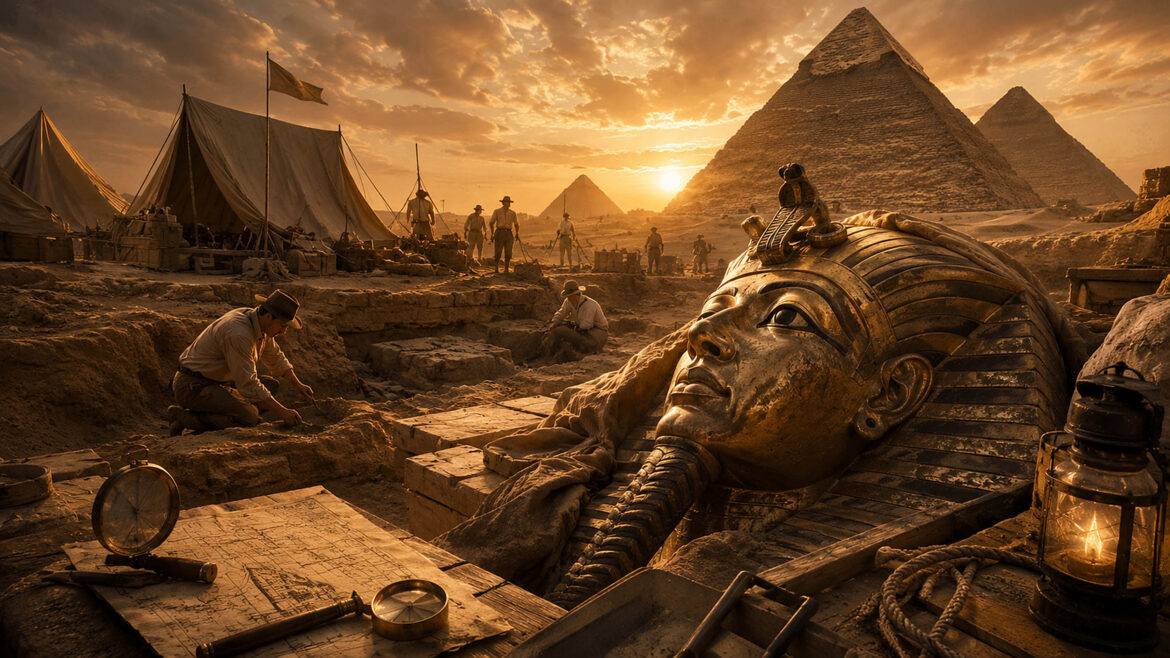
On the other hand, another part of the story is completely true. On 26th November 1922, Lady Evelyn was right there inside Tutankhamun’s tomb as it was being opened. Standing shoulder to shoulder with her father and Howard Carter, she was the very first to lay eyes on the legendary treasures. Many historians also accept and consider highly probable the bit where, the night before the official opening, the same trio secretly drilled a tiny hole just to get a sneak peek at what lay inside.
But let’s get back to Hatshepsut. In the chapters narrated by her, we get the story of her rise to power and how she managed as queen – navigating the expectations of her people, the priests, and the army, while constantly working to secure her legacy. Plus, there are descriptions of ancient rituals, daily court life, and religious beliefs, which many will find absolutely fascinating.
In both timelines, we also get some light romance subplots that don’t overwhelm the main story.
What absolutely delighted me? The description of what archaeological digs looked like in the early 20th century. Back then, excavation rights were often just handed to wealthy aristocrats who would turn up on-site with parasols, tables, teacups, and tea, wearing their “digging outfits,” while a whole army of local workers did all the heavy lifting. I absolutely love that vibe. On top of that, reading “Daughter of Egypt” teaches us about the history of archaeology and its most famous moment – the discovery of Tutankhamun’s tomb. Benedict gives us all the background to the event, showing how it happened and how, honestly, it might never have happened at all.
Then there’s the political and social layer, as this was the exact moment when strong independence and nationalist movements began to emerge in Egypt. Colonialism was starting to shake at its very foundations.
I was a little less enchanted by the ancient history parts. Perhaps because so very little is actually known about Queen Hatshepsut (mostly because her memory was quite effectively erased – or rather, chipped away from stelae, walls, and paintings). Why? You’ll have to read and find out. Though I should warn you that the author exercised her right to create fiction here, but she explains a bit more in the afterword, linking it back to what we actually know thanks to discoveries and excavations.
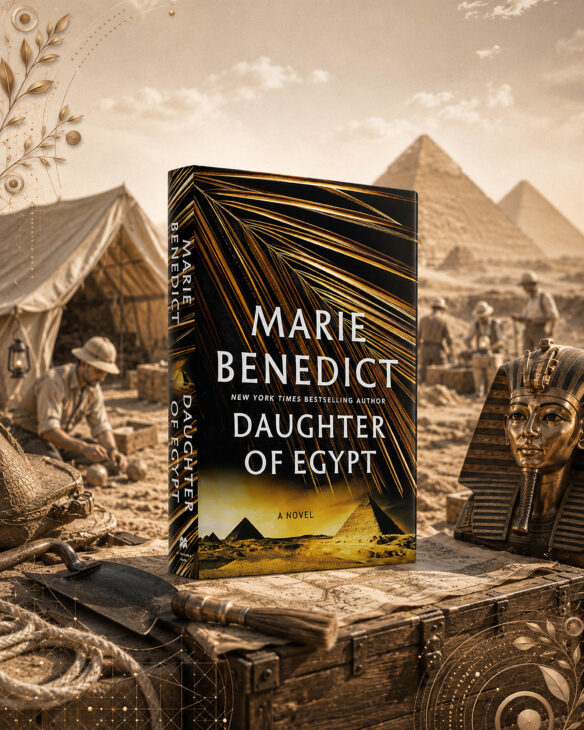
And that brings us back to “Team Evelyn” and “Team Hatshepsut”. Readers have been debating quite fiercely over which timeline is better written. Most claim that Hatshepsut’s story is the livelier, more colourful, and more emotional one. Turns out, I’m in the minority because I’m firmly on Team Evelyn. Throughout the entire novel, I had the distinct impression that she and her character were the whole reason the book was written in the first place. I was convinced the research here went much deeper and that Benedict mainly wanted to write about her, as the 20th-century chapters felt like they were crafted with more passion and knowledge. So imagine my surprise when the author stated in the afterword that she was actually fascinated by Hatshepsut, and only stumbled upon Lady Evelyn somewhat by accident, leading her to merge the two figures into a single story. A reader’s life is truly full of surprises!
I’m very curious to see which team you’ll end up on.
Aga J. Mackiewicz
for Intensive Chapters
A human, not artificial intelligence, is always responsible for the substantive content and final form of all texts on this website. No text is the result of any advertising partnership. All content represents our own, sometimes subjective, opinions, and no payment has ever influenced them. Photos used in the posts are our own, while graphics are created with the help of AI tools.